They can share a cup at a bubble-tea counter and they are both called pearls, but they are made differently, they eat differently and they suit different drinks. Here is the difference in one table, then each in turn, with an Indian kitchen in mind.
The short version
| Compared | Popping pearls | Tapioca pearls and sabudana |
|---|---|---|
| Made from | Flavoured juice inside a skin set with sodium alginate and calcium | Tapioca: starch extracted from the cassava root |
| Texture | A thin skin that bursts; liquid inside | Soft, chewy and elastic |
| Cooking | None. Peel the cup and add | Soaked, then boiled before use |
| Hot or cold | Cold or room temperature only | Bubble tea is mostly served cold; some shops serve it hot |
| Inside | Juice | Cooked starch, with no liquid centre |
| Where you find them in India | Bubble-tea and frozen-yogurt counters, or a sealed cup | Sabudana: khichdi, kheer, vrat dishes; bubble-tea counters |
The tapioca column comes from public sources, linked below each fact on this page. The popping pearl column is how ours are made and used.
What tapioca pearls are
Tapioca is a starch extracted from the root of the cassava plant. Tapioca pearls are made by pressing the moist starch through a sieve. Before they are eaten they are soaked and then cooked: raw, they are hard and opaque, and boiled, they turn translucent, soft and chewy, with an elastic bite (Wikipedia: Tapioca).
They are the pearls that gave bubble tea its name. Bubble tea is a tea-based drink, most often with chewy tapioca pearls, milk and flavouring, and it began in Taiwan in the 1980s. Most bubble-tea pearls are black from brown sugar, and they only turn chewy and dark once they are cooked and sweetened (Wikipedia: Bubble tea).
The point for a home kitchen: tapioca pearls are a cooking job. They need a pot, boiling water and some time before they go anywhere near a glass.
Telling them apart at a glance
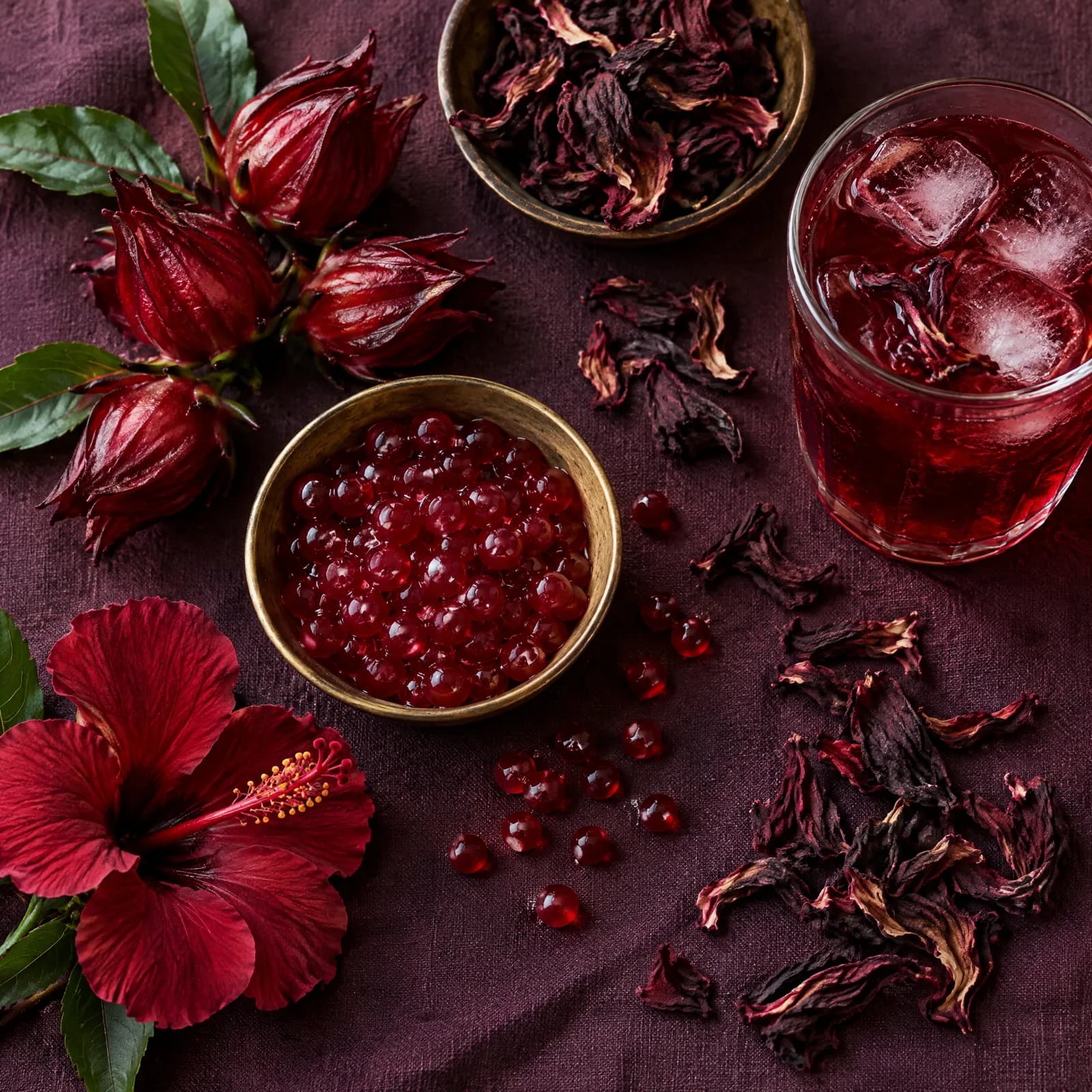
Cooked tapioca pearls are translucent, and in bubble tea they are usually dark from brown sugar. Popping pearls are glossy and take the colour of the juice inside them: ours are ruby for Hibiscus, orange for Peach and yellow for Lemon. If you are still not sure, bite one. A chew is tapioca; a burst is a popping pearl.
Is sabudana the same as tapioca pearls?
Yes. Across the Indian subcontinent, tapioca pearls are known as sabudana (or sagudana, or sabba akki in Kannada). They are the same cassava starch that goes into bubble tea, and the same pearls that go into sabudana khichdi, kheer and many vrat dishes (Wikipedia: Tapioca).
So people do make bubble tea at home with the sabudana already in the cupboard. Slurrp’s round-up of five sabudana bubble teas washes the sabudana four or five times, boils it for three to five minutes and then plunges it into iced water before it goes into the glass (Slurrp: These 5 Bubble Teas Are Made With The Staple Sabudana).
If you grew up with sabudana khichdi, you already know the texture of a tapioca pearl: soft, a little translucent, with a chew. A bubble-tea pearl is the same thing, sweetened and darker. That is the whole difference in one line: sabudana and tapioca pearls are cooked starch; popping pearls are not starch at all.
What popping pearls are
A popping pearl is a small sphere of flavoured juice inside a thin, soft skin. It holds its shape in a drink and bursts when you bite. The skin is set by spherification, where sodium alginate meets calcium, so there is no starch in it and nothing for you to cook (Wikipedia’s article on popping pearls).
Because the flavour is in the juice, a popping pearl tastes of something on its own, not just of the drink around it. Ours come sealed, 40 ml to a cup, which is one serving, in Hibiscus, Peach and Lemon: floral and tart, soft and juicy, bright and zesty. Our Hibiscus ingredient list has no tapioca starch and no gelatin in it. The longer answer is in what are popping pearls?
Which one for which drink
Choose by temperature first, then by what you want in the mouth: a chew or a burst.
- A hot drink: tapioca, if anything. Bubble tea is mostly served cold, but some shops do serve it hot (Wikipedia: Bubble tea). Popping pearls never go into anything hot.
- Iced tea and cold fruit tea: popping pearls, tipped in last. Try the peach iced tea or the hibiscus lemon green tea.
- Soda, nimbu pani and coolers: popping pearls, poured over ice and tipped in last. Try the Hibiscus Sparkler or the pearl shikanji.
- Lassi and cold milk: popping pearls, added last. Try the rose milk with hibiscus pearls or the lassi bar.
- Desserts: popping pearls over yogurt, ice cream and kulfi. Falooda can take both: tapioca pearls are one of the things that go into falooda (Wikipedia: Tapioca), and our three-pearl falooda puts popping pearls in bands down the glass.
- A slow, chewy sip through a wide straw: tapioca pearls or sabudana.
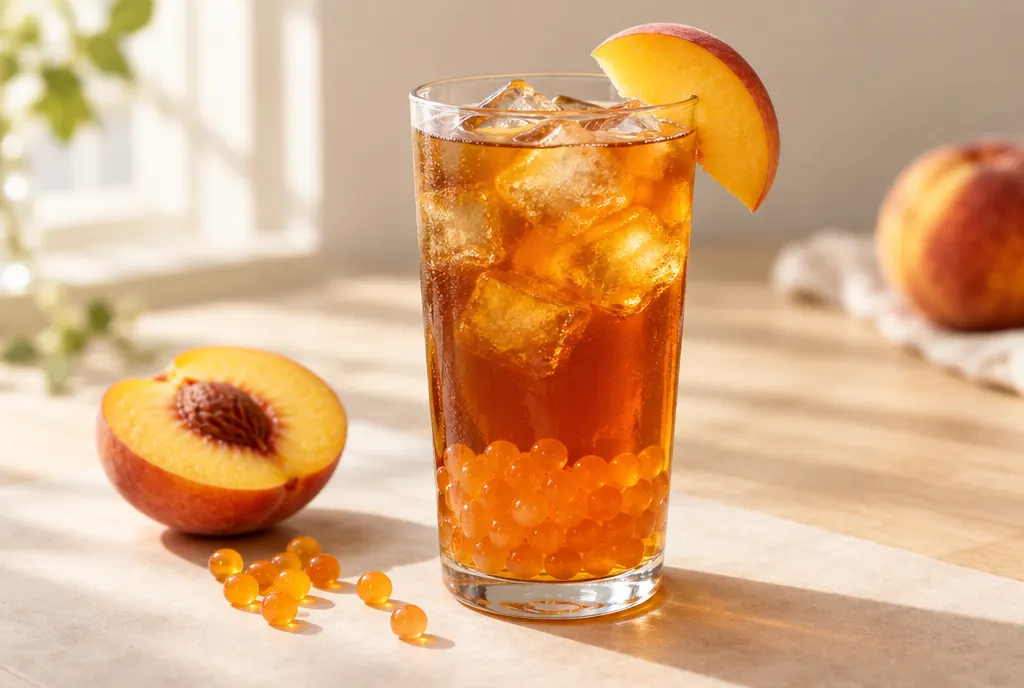
More cold drinks, all counted in cups of pearls, are on the drink recipes page.
Using both in one glass
You can, as long as the glass ends up cold. Cook the tapioca or sabudana first, the way its recipe says, and bring it right down to cold before it meets anything else; the Slurrp method plunges it into iced water. Then build the glass from the bottom up:
- The cooked, chilled tapioca or sabudana.
- Ice.
- The cold drink: iced tea, cold milk tea, a fruit cooler.
- One cup of popping pearls, last, on top.
You get the chew at the bottom and the burst on the way down. Use a wide straw so both fit through, and drink it while it is cold.
Bubble tea at home, with nothing to cook
If the boiling is what puts you off bubble tea at home, leave the tapioca out. Brew the tea strong, let it chill completely, sweeten it, then ice, pour, and one cup of popping pearls last. The peach iced tea, the lemon honey iced green tea and the sunset layer iced tea all work this way.
How much, how cold and what not to do is all in how to use popping pearls, and the words on this page are defined in the glossary.